This site is intended for UK healthcare professionals


Featured Videos

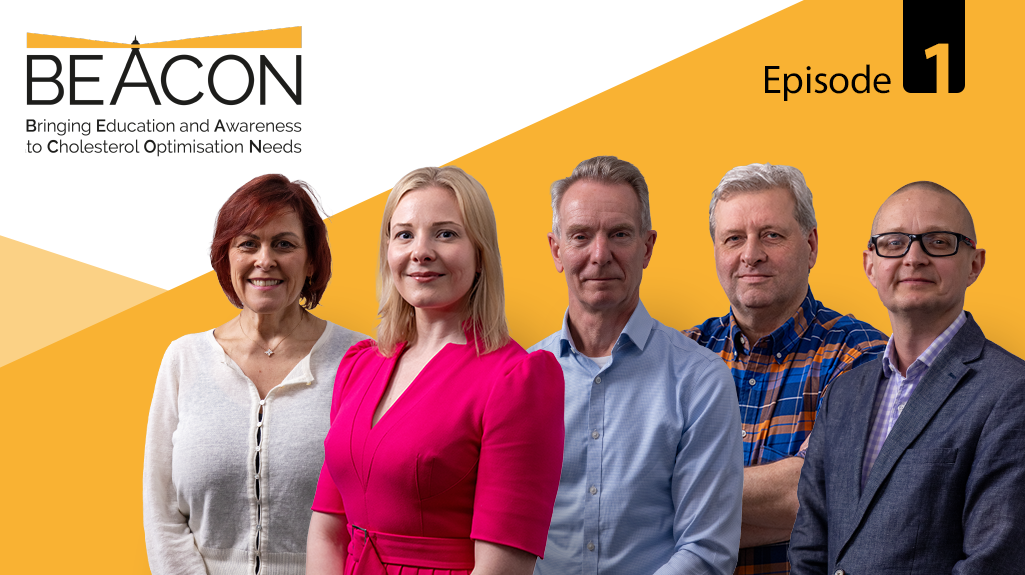
This interactive BEACON session explores the management of younger patients at high lifetime cardiovascular risk whose QRISK® scores may underestimate their true risk. The faculty will examine how to identify patients who would benefit from earlier intervention, interpret lifetime versus 10-year cardiovascular risk, and optimise lipid-lowering and cardiovascular risk reduction strategies in line with current evidence and guidelines.

Funding for the filming, production and publishing for this video was provided by A. Menarini Farmaceutica Internazionale SRL. Menarini has had no input into the video's content or hosting.

This short video outlines the role of the NAC (National Amyloidosis Centre) in managing patients you refer to them with suspected amyloidosis. It highlighting the use of accurate diagnostic testing techniques available at the NAC, including imaging, histology and proteomics, as well as the genetic testing and counselling that provide important components of holistic care.

Funding for these videos has come from multiple pharmaceutical industry sponsors. Further details of each company’s involvement can be found on the video page.

This Masterclass was developed in collaboration with the National Amyloidosis Centre, London UK

Amyloidosis is rapidly gaining recognition as a previously under-diagnosed cause of cardiomyopathy and heart failure. Here, experts from the National Amyloidosis Centre – the only centre in the UK specialising in the management of the condition – provide an overview of its prevalence, symptoms and key treatment principles.
This Masterclass was developed in collaboration with the National Amyloidosis Centre, London UK

Assessment of a patient with suspected amyloidosis requires a careful diagnostic workup, including cardiac imaging to identify amyloid infiltration in heart tissue that could lead to diastolic dysfunction and heart failure. In this Masterclass, clinicians and scientists from the National Amyloidosis Centre describe the laboratory tests and imaging techniques used to make an accurate diagnosis.
This Masterclass was developed in collaboration with the National Amyloidosis Centre, London UK

Effective treatment of cardiac amyloidosis is dependent on early diagnosis; it is therefore important that clinicians have a high index of suspicion for the condition in their patients. Dr Josephine Mansell from the National Amyloidosis Centre outlines the “red flag” signs and symptoms that cardiologists, nurses or other healthcare professionals may observe in their patients, and which should prompt consideration of referral for a full diagnostic workup.
In recent years, there has been a switch to direct oral anticoagulants (DOACs) as first-line thrombosis prevention, with fewer people started on a vitamin K antagonist, such as warfarin. This has led to an increase in number of people taking anticoagulants and, therefore, an increased risk of intracranial and intracerebral haemorrhages and gastrointestinal bleeds. Listen to Richard Buka, Clinical Research Fellow Institute of Cardiovascular Sciences at the University of Birmingham, discuss the challenges clinical teams face in the reversal of these drugs. He explores the findings of recent trials of Andexanet alfa and considers how effective these drugs really are and what it means in practice.

 

Thanks for your feedback. Please note that by including your email address, you are giving permission for us to contact you by email to help resolve any issues.